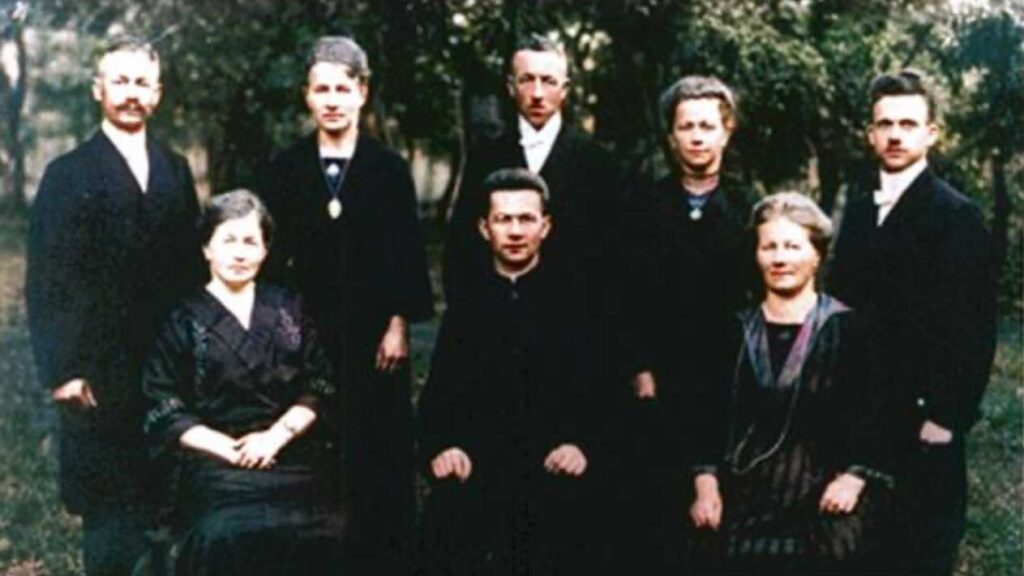
Biography of Blessed Eduard Profittlich

Eduard Profittlich (1890–1942) was a German-born Jesuit who in the 1930s became the architect of a new era for the Catholic Church in Estonia and the first post-Reformation Archbishop of Mary’s Land (Estonia). His biography is a testament to unwavering faith and heroic fidelity, which culminated in his conscious decision to stay with his flock even under Soviet occupation and repression.

This fidelity, leading to his martyrdom in Kirov prison, has made him Estonia’s first blessed martyr, whose life and example still call us today to find our strength in Christ. This overview reveals the Archbishop’s journey from a deeply religious family in the Rhineland to his heroic sacrifice of life, serving as an inspiration to all who seek the path to truth and holiness.

Early Years and Studies

Eduard Profittlich’s experiences and intellectual preparation became the foundation for his future service and the heroic fidelity that characterized him until the end of his life.

Where was Blessed Eduard born?

Eduard Profittlich was born on September 11, 1890, in the village of Birresdorf in Rhineland, Germany. He grew up in a spiritually rich and deeply religious Catholic family, being the eighth of ten children born to his parents, Markus Profittlich and Dorothea Seiwert. His upbringing at home was marked by obedience and piety, with an active prayer life at its core, and the children were surrounded by great family care and love.

This region of Germany, especially the area around the Ahr valley, was known for its fertile fields and vineyards, where community life was held together by both hard work and common church holidays. The religious heart of Birresdorf village was the 17th-century Chapel of St. Hubert, located near the Profittlich family farm, where young Eduard prayed with his family. Although the archbishop’s birthplace no longer exists, today a street in Birresdorf is named in his memory, and a bas-relief dedicated to him has been installed on the wall of the home chapel.

"Fides et Pax"

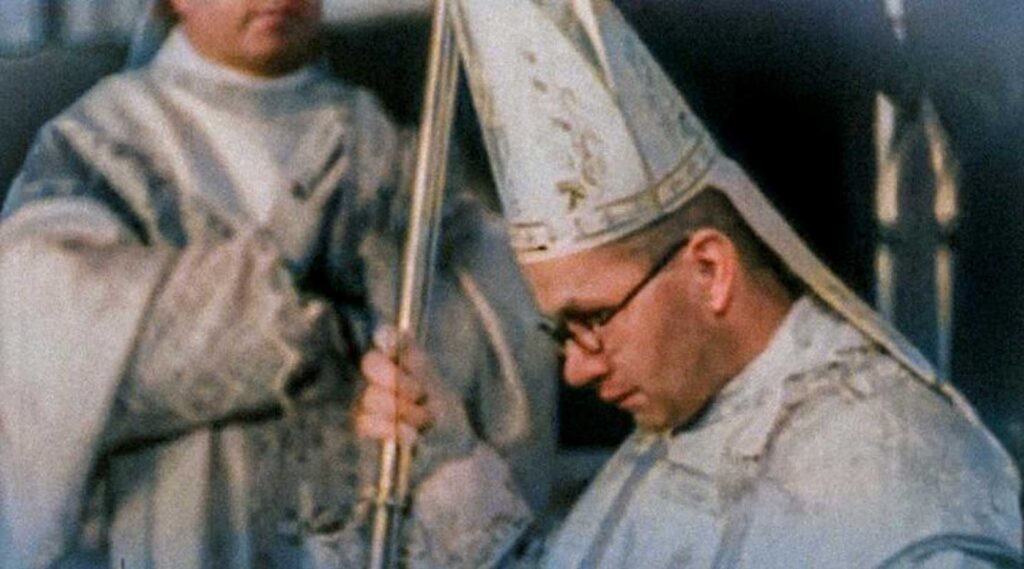
On December 27, 1936, when Eduard Profittlich was consecrated archbishop in Tallinn’s Saints Peter and Paul Church, he chose “Faith and Peace” (Fides et Pax) as the motto for his work and episcopal coat of arms. This motto was not merely an official symbol for him, but a profound spiritual program with which he called upon his flock to cherish these two gifts of Christ as the greatest treasures of life. Profittlich taught that the Catholic faith provides a solid foundation and clarity for life in confusing times, while true peace within us prevails and grows the more carefully we follow God’s voice within ourselves.

Eduard's family and elder brother

Eduard was born into a devout Catholic family, the eighth of ten children of Markus Profittlich and Dorothea Seiwert. His childhood home was characterized by a deeply religious and God-fearing spirit, with an active prayer life and great familial care at its core. The family owned a farm in Birresdorf, where hard work was balanced by shared church holidays and village festivities that brought together both the large extended family and the local community. These early years in a religious and hardworking environment laid the foundation for Eduard’s later spiritual journey and unwavering steadfastness.

A special role in the development of Eduard’s vocation was played by his older brother Peter Profittlich, who also found a priestly calling and served as an important role model for his younger brother. Peter joined the Society of Jesus already in 1899 and, after his studies, went on mission to Brazil. Although Peter died in Brazil at only 37 years of age, his dedication and Jesuit spirituality inspired Eduard to follow the same path and fully dedicate his life to the service of God.

In addition to Peter, Eduard had an exceptionally close bond with his brother Stephan, with whom he always stayed when visiting his home region. The close correspondence and mutual support between the brothers lasted for years, reflecting the great inner unity and love of the Profittlich family. Although time has taken its toll and many close relatives have passed away, the brother’s grandchildren and other descendants keep alive to this day the memory of their dignified relative, whom they affectionately called ‘Ettik’ in their youth.

Studies

Eduard Profittlich’s educational journey began at Leimersdorf Primary School (1896–1904), after which private tutors directed the talented boy to pursue higher education. After preparatory gymnasium studies in Ahrweiler and graduation from Martinus-Gymnasium in Linz am Rhein (1912), he began studying at the Trier seminary. During the two semesters spent there, his vocation solidified, which led him to join the Society of Jesus, also known as the Jesuit Order, in 1913. His spiritual formation continued with a novitiate in Heerenberg, Netherlands, followed by philosophy and theology studies at the renowned Ignatius College in Valkenburg.

Profittlich’s thorough academic training was interrupted by service in the medical corps during World War I, but this gave him valuable experience in acts of mercy with the dying and wounded. After his ordination as a priest in 1922, he was sent to the College of the Sacred Heart of Jesus in Kraków, Poland, which was part of a papal plan to promote the Eastern Mission.

In Kraków, he earned a doctorate in dogmatic theology, mastered the Polish language, and delved into classical languages such as Latin, Hebrew, and Greek. These intensive years of study and intellectual capacity laid the foundation for his future role as the leader of the Catholic Church in Estonia.

Activity in Estonia

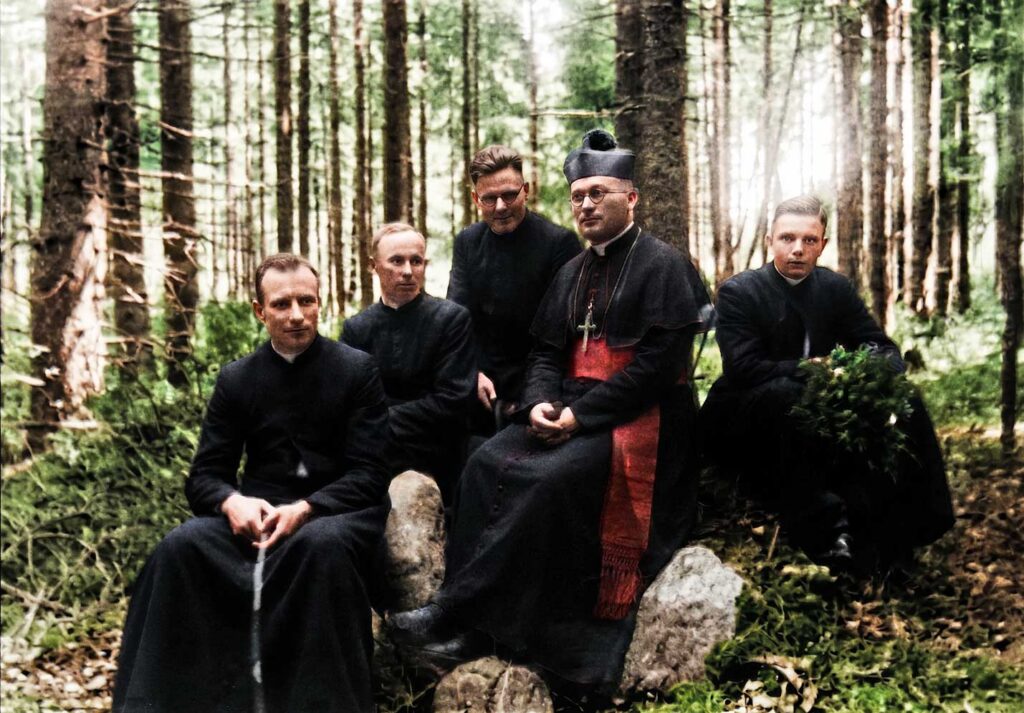
Upon arriving in Tallinn in December 1930, Eduard Profittlich dedicated the following decade to the spiritual and organizational rebirth of the Catholic Church in Estonia, transforming what had been a ‘Polish church’ into a vibrant faith community that valued the local language.

Estonia before Profittlich's Arrival

In the early years of the Republic of Estonia, the Catholic Church in Mary’s Land was still in its formative organizational stages and was in a very poor spiritual and material state. From November 1, 1924, the Church in Estonia became an independent unit directly subordinate to the Pope, led by the Jesuit Monsignor Antonino Zecchini, who resided in Riga. Although the loyal Jesuit Henry Werling had tirelessly served the faithful, administered the sacraments, and offered pastoral care since 1923, the local church still needed new missionaries and stronger local leadership to achieve the desired growth.

Materially, the situation before the arrival of Eduard Profittlich was bleak, as the existing church buildings were dilapidated and unheated. There was also a great shortage of spiritual literature and native-language texts that would have supported the spiritual life of the faithful and helped them better understand and receive the holy sacraments. This made systematic pastoral care and the spiritual reconstruction work of the Church extremely difficult.

Socially, a deeply ingrained prejudice prevailed in the 1920s that the Catholic Church was primarily ‘the church of the Poles’. The largest parishes in Tallinn and Tartu indeed consisted predominantly of members of Polish, Lithuanian, and German origin, and the connection with the Estonian-speaking population was weak. It was into this situation that Monsignor Zecchini, on December 4, 1930, called Eduard Profittlich to be the priest of the Tallinn parish, whose task it became to transform Catholicism in Estonia into a vibrant and locally inclusive religious community.

For Profittlich, the Estonian language and Estonian priests were important

Eduard Profittlich understood that to reach the hearts of the local people, he needed to master their language and understand their culture. He therefore learned Estonian so quickly that he soon began preaching and writing articles in it. He also demonstrated deep affection for the Estonian state by acquiring Estonian citizenship in 1935.

The Archbishop’s strategic goal was to transform the existing “Polish church” into a true “Estonian church,” with its membership growing from the local population. He firmly believed that the lasting development of the Church depended on Estonian priests, and immediately upon his arrival, he began training future clergy on the soil of Mary’s Land. To this end, he established a boys’ boarding school in Tallinn to offer spiritual education to young Estonians and encourage them to find their priestly vocation. Although challenging circumstances in Europe and repressions hindered the full realization of many plans, young men such as Alexander Dordett and Aleksander Kurtna came to faith and studies under his guidance.

"Always have paper and a pencil at hand to write down God's thoughts."

Blessed Eduard Profittlich’s advice to Catholics.

What was Blessed Eduard like?

Eduard Profittlich was a joyful, lively, and exceptionally open-minded person, known as an excellent communicator. He had a rare gift for finding time for everyone, whether a member of his parish or someone still seeking their path of faith, and with his dignified and kind demeanor, he gained widespread favor in Estonian society. Contemporaries remember him as a good shepherd and a renowned confessor, who, when preaching, could speak sincerely and directly to people’s souls. His nature was characterized by deep Christian optimism – the Archbishop firmly believed that no Christian should be sad or depressed, but must reflect the joy and hope that comes from faith.

As a clergyman and leader, Profittlich was deeply educated, disciplined, and resolute, remaining entirely faithful to his vocation and the hierarchy of the Church. He was characterized as a very frugal and self-sacrificing person, whose most outstanding quality was his talent for pastoral care and his ability to find reconciliation in difficult conflict situations. He was a wise and mature individual who well understood the necessity of ecumenism and maintained good relations with representatives of other confessions. The final stage of his life brought forth the Archbishop’s heroic courage and humility, which were based on unwavering trust in God – he did not consider himself important, but faithfully served his flock until his martyrdom, finding deep spiritual peace in this journey.

Spiritual Life

The foundation of Eduard Profittlich’s spiritual life was incessant prayer and deep devotion to the Most Sacred Heart of Jesus, which reflected his heroic humility and unwavering fidelity to Christ even in the most difficult trials.

Jesuit

Eduard Profittlich joined the Society of Jesus, or the Jesuit Order, in 1913, receiving significant inspiration from his elder brother Peter, who was also a Jesuit and a missionary. His spiritual and academic preparation was extremely thorough, encompassing novitiate in Heerenberg, Netherlands, and studies in philosophy and theology at St. Ignatius College in Valkenburg and the College of the Sacred Heart of Jesus in Kraków. This long and demanding formative journey shaped him into a deeply educated and disciplined “soldier of Christ,” ready to selflessly serve wherever the Order and the Pope would send him.

Jesuit spirituality and the principle of doing everything for the greater glory of God (Ad Maiorem Dei Gloriam) became the central axis of Profittlich’s activities. After taking his final vows on February 2, 1930, in Hamburg, he was sent to Estonia, where his Jesuit training – particularly his outstanding linguistic talent and pastoral care skills – proved invaluable in the spiritual rebuilding of the local church. Throughout his life, he was guided by the Spiritual Exercises of St. Ignatius and unconditional obedience to the Holy Father, which gave him heroic peace and faithfulness to remain with his flock and to accept martyrdom out of love for Christ.

Devotion to the Most Sacred Heart of Jesus

Archbishop Eduard Profittlich’s personal spiritual life was deeply connected to the devotion to the Sacred Heart of Jesus, which is a spiritual practice traditionally much loved among members of the Society of Jesus. This form of piety is based on the visions of Saint Margaret Mary Alacoque and symbolizes Christ’s boundless divine love and compassion for all humanity. For Profittlich, this was not merely a religious obligation, but one of the cornerstones of his spiritual life, which helped him understand and mediate God’s mercy in all human suffering.

While serving in Estonia, Archbishop Profittlich also encouraged his parishioners to turn in prayer to the Sacred Heart of Jesus and entrust all their prayers to Him. His special connection to this devotion was also reflected in significant milestones of his life, such as the eternal vows he made to the Society of Jesus in 1930 at the Residence of the Sacred Heart of Jesus in Hamburg.

Chapels and Centers

Under the visionary leadership of Archbishop Eduard Profittlich, the network of the Catholic Church expanded across Estonia, encompassing new parish centers, Eastern Rite chapels, and spiritual retreats like Kodasema, which served both the spiritual formation of clergy and the religious growth of local communities.

Nõmme Chapel

One of Archbishop Eduard Profittlich’s main strategic goals was the training of Estonian priests, to transform the existing ‘Polish church’ into a true ‘Estonian church’. To realize this vision, he established a boarding school for boys in Tallinn, which served as a study center for young seminary candidates and those interested in faith. The center offered spiritual education to young people and created a favorable environment for discerning a priestly vocation, as Profittlich firmly believed that the lasting development of the Church in the Land of Mary depended precisely on the local clergy.

Kiviõli Chapel

In the 1930s, Kiviõli became one of Estonia’s most active Catholic religious regions, thanks to nearly 600 Poles who came to work in the oil shale mines. To spiritually serve this large and significant center and support the local community, Jesuit priest Stanisław Rut worked there, who helped preserve both faith and national patriotism in the miners’ families. Under Profittlich’s leadership, Kiviõli became an important Catholic center, where religious life was very vibrant despite difficult working conditions.

Kodasema Center

In 1936, Archbishop Eduard Profittlich purchased the old Kodasema manor house in Järvamaa to establish a place for spiritual practice for Jesuit priests and a Catholic recreation and cultural center. The property, which belonged to Baron Engelhart, was successfully acquired thanks to generous donations from Catholics in France and England. In 1938, a thorough renovation of the building began, where a chapel was primarily set up, offering a spiritual home to the Eastern Rite Jesuits living there.

Kadriorg Seminarians' Study Center

One of Archbishop Eduard Profittlich’s main strategic goals was to train Estonian priests to transform the existing “Polish church” into a true “Estonian church”. To realize this vision, he established a boys’ boarding school in Tallinn, which served as a study center for young seminary candidates and those interested in faith. The center offered spiritual education to young people and created a favorable environment for discovering a priestly vocation, as Profittlich firmly believed that the lasting development of the Church in the Land of Mary depended precisely on the local clergy.

Political situation in Europe

By the end of the 1930s, the political situation in Europe became extremely tense, carrying the post-World War I uncertainty and the rise of new totalitarian regimes. A turning point was the Molotov-Ribbentrop Pact concluded in 1939, with which Hitler and Stalin divided Europe into spheres of influence, leading to the systematic destruction of the political elite and the severing of cultural ties with the West. This agreement triggered a chain of events which led to the outbreak of World War II and laid the foundation for the suffering of millions of people as victims of both National Socialism and Communism.

For Estonia, political pressure first meant the agreement on the resettlement of Germans in the autumn of 1939, which also offered Profittlich an opportunity to leave, and then the full Soviet occupation in June 1940. The nationalization of churches, intense anti-religious propaganda, strict control over the activities of the clergy, and the imposition of extremely high rental prices turned the life of the Archbishop and his flock into a daily struggle for survival. In this atmosphere of “hellish forces unleashed”, where there was complete contempt for human dignity, the Archbishop had to make his deliberate and heroic decision to remain faithful to his flock in the Land of Mary.

Profittlich's decision to remain with his flock

At the beginning of the Soviet occupation in 1940 and during the subsequent resettlement of Germans, Archbishop Eduard Profittlich faced a difficult choice: whether to return to Germany for safety or to remain with his faithful in Estonia. Although he was given the opportunity to leave, after long deliberation and consultation with the Pope, he decided to remain faithful to his flock in the Land of Mary. In his last letter sent to relatives on February 8, 1941, which is considered his spiritual testament and a relic, he articulated his heroic stance:

“It is also right that the shepherd remains with his flock and shares their joys and sorrows.”

This conscious and deliberate decision was not born of fear, but of deep spiritual joy and readiness to give his life for Christ and the Church. Profittlich understood well that remaining in Estonia meant foregoing the protection of a German citizen and complete submission to the anti-religious Soviet regime, which could lead to imprisonment or death. His unwavering principle “where the flock is, there also is the chief shepherd” became the cornerstone of his journey to martyrdom, confirming that a shepherd’s love for his faithful is stronger than the fear of suffering.

Last letter to loved ones

Archbishop Eduard Profittlich sent his last letter to his loved ones in Germany on February 8, 1941, while he was in Tallinn. This letter is considered his spiritual testament and has now become the official relic of Blessed Eduard, which his relatives handed over to the Diocese of Tallinn in May 2025. In the letter, the archbishop explained his difficult choice: although he, as a German, was strongly advised to resettle in Germany to escape the Soviet occupation, he felt, after prayers and encouragement from the Pope, that God’s will was for him to remain in the Land of Mary. He warned his relatives that he would have to cease all correspondence from then on, as the Soviet authorities might consider it espionage, which would lead to dangerous consequences for both him and the Church.

In the letter, Profittlich articulated his heroic pastoral stance, which has remained in the history of the Catholic Church in Estonia.

"It is, after all, right that a shepherd remains with his lambs and shares his joy and sorrow with them. And I must say that it took a few weeks of preparation to make this decision, but it was not born of fear and apprehension, but rather with great joy [---].

I would have liked to tell everyone how good God is to us when we are willing to sacrifice our entire life and freedom for Christ. I know that God is with me. And then all will be well. And my life, and if necessary, my death, is life and death in Christ. And that is inexpressibly beautiful."

Martyrdom in Kirov

After his arrest in Tallinn on June 27, 1941, Archbishop Eduard Profittlich was deported to Kirov Prison No. 1, where he had to endure months of exhausting nightly interrogations and inhuman conditions. Investigators groundlessly accused him of anti-Soviet agitation, espionage, and glorifying the ‘German iron fist,’ attempting to break him both morally and physically. Despite mental pressure and deteriorating health, which was also reflected in his changed handwriting, Profittlich remained calm and dignified in his responses, asserting that his sole purpose was the pastoral care and service of the faithful. On November 21, 1941, the Kirov Oblast Judicial Collegium sentenced him to death by firing squad, accusing him of exploiting the religious feelings of the faithful against the regime.

Although the Archbishop appealed the verdict, asserting that he never wished to harm Soviet Russia, his appeal was rejected in January 1942. However, the death sentence could not be carried out, as the heroic chief shepherd died as a result of prison torments and harsh conditions on February 22, 1942. His solitary death in a hostile environment is for the Catholic Church the supreme sacrifice of love – a martyrdom by which he affirmed his fidelity to Christ and the Estonian people. Profittlich’s martyrdom symbolizes a spiritual victory over violence, and this conscious giving of his life for his flock became the basis for the recognition of his path to holiness and his subsequent beatification.

Contact Us and Share Your Story

If Blessed Eduard Profittlich has helped you in your life, you have experienced help through his intercession in prayer, or you wish to share your personal testimony, then we ask you to contact us. Your story is a precious and important part of preserving the legacy of Archbishop Profittlich and documenting his path to sainthood.

Contact us

Võta meiega ühendust